

Most moving-day problems come from details settled a week earlier: a truck with nowhere to park, a building that needs a certificate of insurance, boxes still open when the crew arrives, an elevator reserved for someone else. Preparing for local movers is mostly about removing obstacles before the crew knocks, then staying available while they work.
The week before, the morning of, and the hours after loading each carry their own decisions. So do the parts nobody writes down, including how to help without slowing the crew and how much to tip at the end of the day.
Confirm the schedule and the access details first
A confirmed start window and a legal place to park the truck decide how the day begins. Call the office two or three days ahead to reconfirm the arrival window, the crew size, and the number of trucks. If your estimate changed after the walk-through, this is the moment to correct the inventory rather than surprise the crew at the door.
Access questions to settle before move day:
- Where the truck can legally park, and whether your city or village requires a permit for a moving truck or container.
- The building's moving hours, elevator reservation, loading dock, and any padding requirement for the elevator or hallway.
- Whether the building manager needs a certificate of insurance from the mover, and where that request should go.
- Stair counts, doorway widths, and the longest carry from the truck to the door at both addresses.
- Whether the destination building has a service elevator, a freight entrance, or a limit on move-in hours.
Buildings that manage this well ask for the certificate of insurance a few days in advance, so start that request when you book the elevator. Falcon Moving handles these requests for Arlington Heights and Elgin buildings regularly, and the details that matter are in the building's own move-in rules, not in a general checklist.
Clear a path and protect what stays
Walk the route the crew will use and remove everything that does not need to travel. Rugs, floor lamps, shoes, pet bowls, and trash bags along the hallway turn a straight carry into an obstacle course, and a clear path usually shortens the bill on an hourly local move.
Protect the surfaces you are leaving behind as well. Cardboard or moving blankets at the entry, a mat in the hallway, and corner guards on tight turns cost little and prevent the scuffs that show up in a walk-through with a landlord or a buyer's agent. Move anything valuable that you are not shipping, including jewelry, documents, medication, and cash, into a bag or box that stays with you.
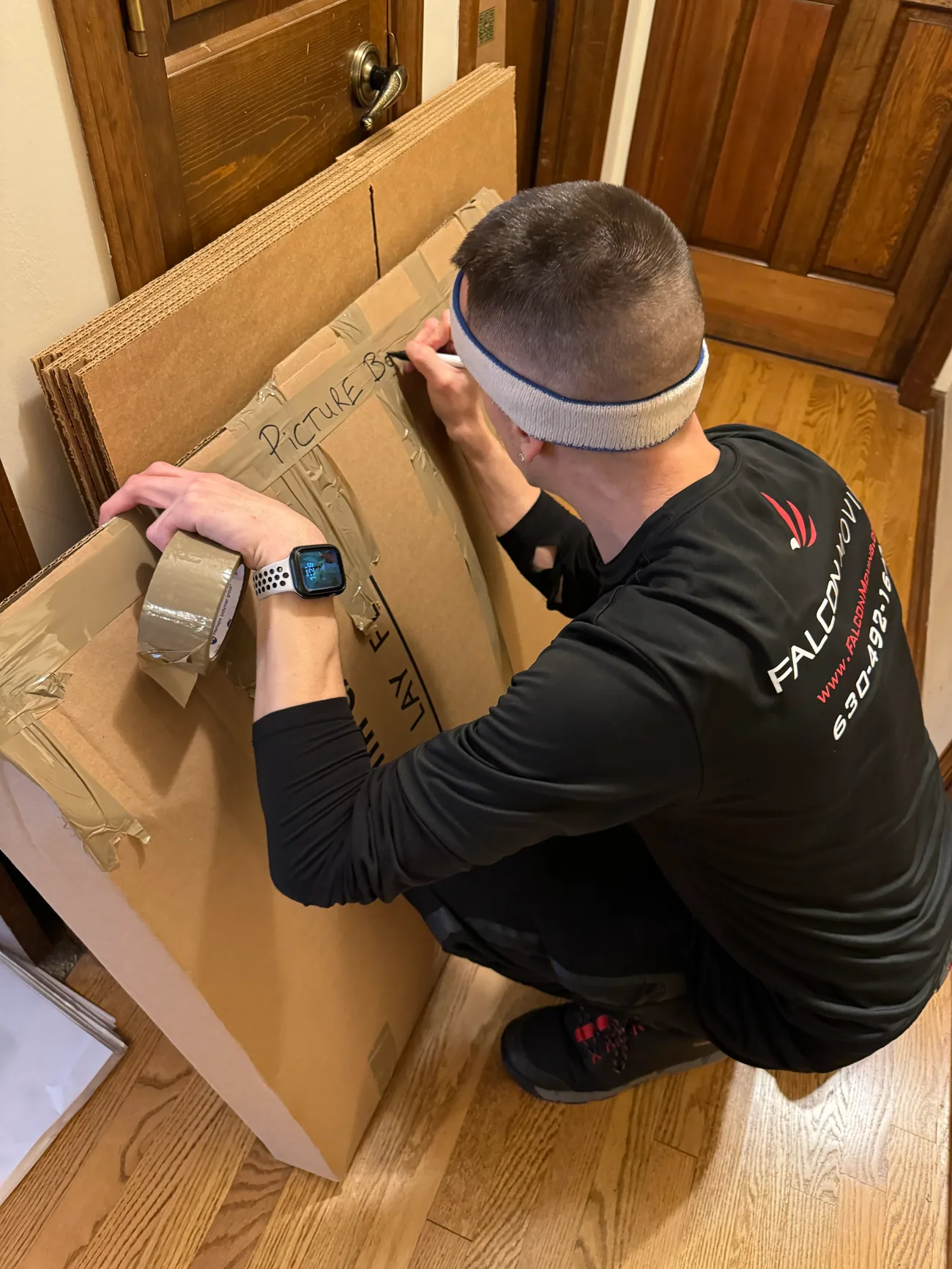
Pets and children need a plan of their own. A room with a closed door, a neighbor's apartment, or a sitter for the morning keeps pets out of open doorways and keeps the crew's attention on furniture.
Finish packing before the crew arrives
Packing already in progress is the most common reason a local move runs long. Boxes need to be closed, taped, and labeled by room, with the destination room written on at least two sides. Weight belongs in small boxes and bulk in large ones; a box that needs two people to lift should be repacked before the crew touches it.
Some items should not go on the truck at all. Movers cannot legally transport hazardous materials such as propane tanks, gasoline, paint thinner, ammunition, and many cleaning chemicals. Plants, perishable food, and open liquids travel badly in a truck that sits in the sun. Medications, passports, birth certificates, and anything irreplaceable belong in your own car.
If packing is the part you dread, full-service packing covers materials and labor before move day, and a partial packing visit can handle the kitchen, the fragile items, and the boxes you never got to. For the boxes you pack yourself, packing fragile items covers the layering that keeps glass and ceramics intact.
Set up a moving-day kit
Keep one box or bag that travels with you and holds what the first night needs: phone chargers, toiletries, a change of clothes, bedding for each bed, paper towels, trash bags, scissors, and basic tools. Keep a roll of tape and a marker in your pocket while the crew loads; labels get smudged and boxes get reopened.
Plan for the crew's basic needs too. Water or sports drinks, a bathroom they can use, and a place out of the weather for breaks keep a long summer or winter day on schedule. None of this is required and none of it changes the price, though a cold drink and a usable bathroom make a long day easier for everyone carrying your furniture.
Know how the day actually runs
A local move follows a predictable rhythm, and knowing it helps you answer questions quickly.
The crew starts with a walk-through. The foreman reviews the inventory, checks access, and confirms anything fragile or oversized. Before loading, expect a bill of lading, which is the contract for the move, and an inventory list. Read both, and note any pre-existing damage on the inventory before the crew leaves the door.
Loading follows the delivery plan: heavy items and box springs first, mattresses bagged, furniture wrapped, boxes and lighter pieces on top. The crew then drives to the new address, and unloading follows the labels. Beds and tables usually get reassembled, and the foreman walks the apartment or house with you at the end so you can note anything that needs attention before signing the paperwork.
Help without getting in the way
The most useful thing you can do on move day is stay reachable and answer questions. A crew that has to find you for every decision loses time you are paying for on an hourly move.
Skip the urge to carry boxes alongside the crew. Movers are trained to lift and carry in pairs, and a customer who gets hurt while helping creates an insurance problem at the exact moment the move needs to keep moving. Point out the fragile pieces, the heavy dresser, and the box with the television, then let the crew do the lifting.
If something looks wrong, say so early. A scratched hallway or a box that went to the wrong room is easy to fix in the moment and harder to resolve a week later.
Etiquette that experienced crews notice
Most moving-day etiquette is simple consideration. Keep the path clear, tell the crew where the bathroom is, offer water, and keep children and pets out of the work area. Turn on the heat or air conditioning at the new place before the crew arrives, since an empty apartment takes hours to reach a comfortable temperature.
Ask questions before the truck is loaded rather than after. If you want a specific piece placed in the garage instead of the living room, say it during the walk-through. Requests made while the crew is carrying a sofa up a staircase cannot be honored safely.
Tipping is the question customers ask most often. A tip is optional, and no reputable company should treat it as part of the bill. Tipping is also customary in the United States, and most customers do tip a crew that works carefully and efficiently.
Tipping local movers
Two methods are common for local moves. The simpler one is a flat amount per mover, given at the end of the day. A half-day job usually lands in the range of $20 to $40 per mover, and a full day runs higher, commonly $40 to $60 per mover. The other method is a percentage of the bill, usually 10 to 20 percent, split across the crew.
These ranges are customary rather than fixed, and they vary by market, crew size, and the difficulty of the job. Move the number up for stairs, long carries, heavy furniture, extreme heat, or a crew that finished ahead of schedule without cutting corners. Move it down, or skip it, when the crew was late, careless, or dismissive, since a tip should reflect the service you received.
Hand cash to each mover individually if you can, and give it at the end of the day when the work is done. Some companies collect tips at the office and distribute them later. If you are unsure how a company handles it, ask the office when you book; that question is normal and never awkward.
What to do if something goes wrong
Note any damage on the bill of lading or inventory before you sign, and photograph the item, the box, and the room while the crew is still there. Then call the office and put the claim in writing. Keep the photos and the paperwork together, since a claim moves faster with a date, an item description, and a copy of the inventory line.
For an interstate move, a written claim must be filed within nine months of delivery, and the carrier must offer a dispute settlement program. For a move inside Illinois, the Illinois Commerce Commission accepts complaints about licensed household goods movers. Neither process replaces a phone call to the office on the day, and both are easier when the details were documented at delivery.
Book local movers with the details already settled
The week between booking and moving day is when a move gets easier or harder. Confirm access, finish the packing, protect the floors, and decide what stays in your car. Then the crew can focus on the work you hired them for.
Searches for movers near me return whoever ranks well that week. Access, parking, and coverage questions decide how a move actually goes, so settle them before you compare prices. Falcon Moving handles local moves across Elgin, Glen Ellyn, Arlington Heights, and nearby suburbs, plus labor-only loading and unloading when you have the truck, storage between addresses, and in-home furniture moves for a single heavy piece. If you are still comparing companies, start with a moving timeline that keeps the last week manageable and request a moving quote once your dates are confirmed.