
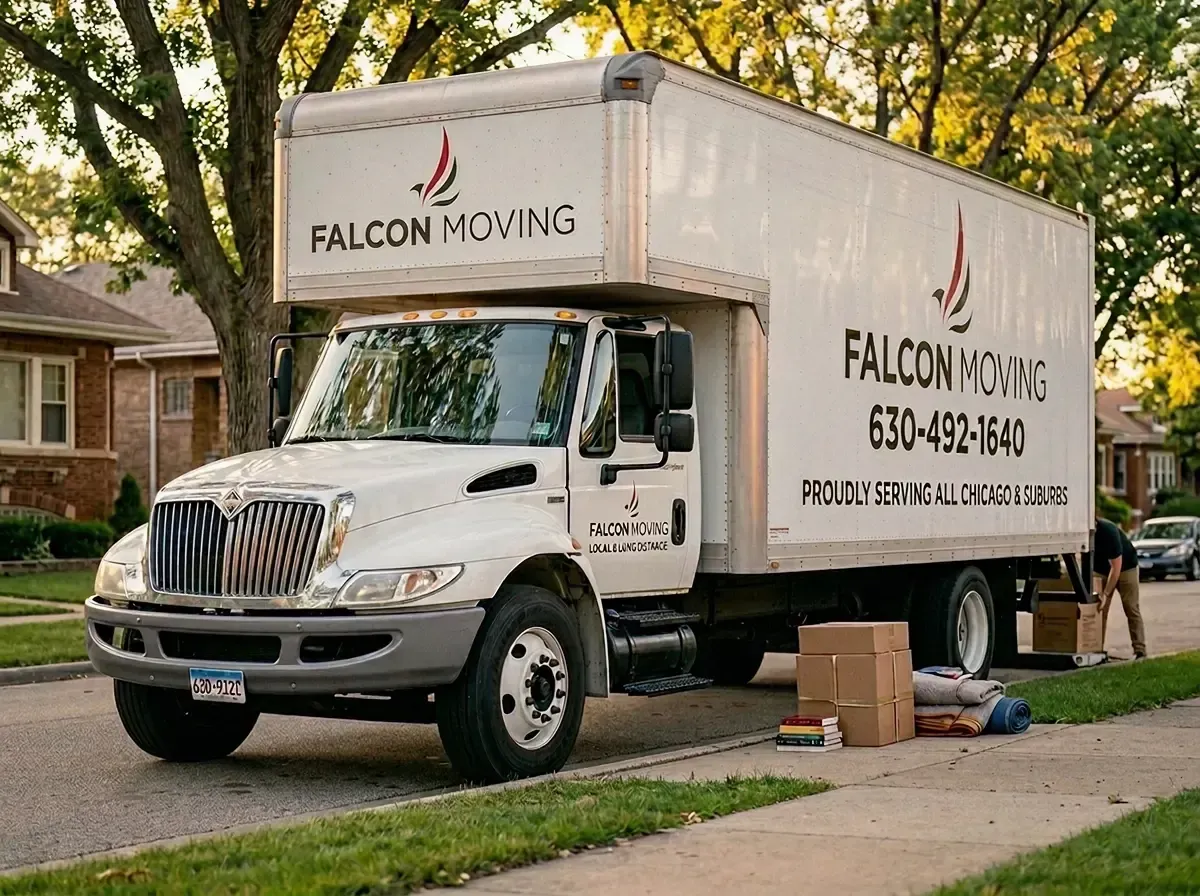
You pack everything carefully in Elgin. The truck travels 1,200 miles to Denver or Salt Lake City. Items that worked perfectly at 700 feet above sea level suddenly leak, lose pressure, malfunction, or stop working entirely at 5,280 feet. Not because anything was damaged in transit, but because the environment changed.
Moving to a higher elevation is not just a change of address. It is an environmental transition that affects atmospheric pressure, humidity, air density, and combustion in ways that most standard moving guides never address. Before committing to a full truckload west, it is worth understanding which items will fail at altitude, which need preparation, and which cost less to replace at the destination than to haul from Elgin.
This guide answers those questions category by category. It also covers what the elevation change means for your body, your pets, and your vehicle, and how Falcon Moving's High-Altitude Audit supports long-distance relocations from Elgin with inventory planning built around these exact risks.
What to Expect When Moving to a Higher Elevation
To understand why certain items fail at altitude, it helps first to grasp the scale of the environmental changes involved.
Elgin, IL, sits at approximately 700 feet above sea level. Common mountain destinations for Elgin residents relocating west include Denver at 5,280 feet, Colorado Springs at 6,035 feet, Boulder at 5,430 feet, and Salt Lake City at 4,300 feet. That is not a gradual shift. It places your belongings, your body, and your vehicle in a set of physical conditions that are measurably different from the moment you arrive.
The single variable that drives most altitude-related problems is atmospheric pressure. At sea level, air pressure is approximately 14.7 psi. At Denver's elevation, it drops to around 12.2 psi. That 17 percent reduction is invisible and odorless, but it produces four specific consequences that matter for a household move:
- Sealed containers hold more internal pressure than the surrounding air, increasing the risk of leaks and discharge
- Combustion engines receive less oxygen per cycle, affecting fuel mixture, power output, and reliability
- The human body takes in less oxygen per breath, triggering the physical adjustment process known as acclimatization
- Wood and natural materials contract as mountain air is significantly drier than the air in northern Illinois
There is also an important transit consideration. Most routes from Elgin to Colorado or Utah cross mountain passes exceeding 11,000 feet before descending to the destination city. This means your belongings experience a wider pressure range during the drive than the elevation at the final destination alone suggests. Items that might be stable at 5,000 feet can experience additional stress at 11,000 feet mid-transit, which is most relevant for sealed containers, pressurized liquids, and temperature-sensitive cargo.
What Not to Pack When Moving to a Higher Elevation (and Why)
Aerosol Cans and Pressurized Containers
Aerosol products are sealed at low-elevation pressure. When transported to a higher altitude, external air pressure drops while internal pressure stays constant, creating a surplus inside the container. For most aerosols in good condition, this causes no noticeable effect. The risk rises for:
- Cans with aging or worn valves
- Containers with weakened seals
- Any product sitting in a cargo hold that reaches 120°F on a summer drive through Kansas
The practical decision is not to transport bulk quantities of inexpensive aerosol products at long-distance moving rates when the same items are available at every grocery store and pharmacy at the destination. Transport only what you need for the first week and replace everything else after arrival. Any aerosol that must make the trip should be stored upright inside a sealed plastic bag to contain any accidental discharge.
Carbonated Beverages and Fermented Products
The same pressure logic applies to carbonated beverages, though less dramatically. Drinks sealed at low elevation arrive at altitude holding more internal pressure than the surrounding air. When opened, they foam more aggressively and lose carbonation faster. Cork-sealed wine bottles face a more specific risk: gradual, pressure-driven cork movement during a long transit in a warm truck, particularly over mountain passes where ambient pressure drops the most.
For everyday beverages, the decision is simple:
- Consume what you can before the move
- Donate the rest to neighbors or a local food bank
- Purchase replacements at the destination
For wine collections of genuine value, arrange specialty climate-controlled shipping rather than standard moving truck conditions, where temperature and pressure fluctuate across a multi-day drive.
Carbureted Engines and Fuel-Powered Equipment
This is the most technically significant altitude risk and the one most consistently overlooked in standard pre-move planning.
Carbureted engines rely on a fixed air-to-fuel ratio calibrated for the air density of the environment where they were built and tuned. At higher elevations, air density drops, meaning each combustion cycle receives less oxygen than the carburetor expects. Unable to adjust, it delivers the same fuel volume into the air that can no longer fully combust it. The result is a mixture that runs too rich, causing:
- Rough or unstable idling
- Significant power loss under load
- Black exhaust smoke
- In some cases, complete failure to start
Fuel-injected equipment does not share this problem. Electronic sensors continuously measure actual air density and adjust fuel delivery in real time, allowing the engine to self-correct without any human intervention.
The items most commonly affected in an Elgin household include:
- Older lawnmowers and riding mowers
- Portable generators manufactured before approximately 2005
- Older motorcycles and ATVs
- Carbureted chainsaws and leaf blowers
- Any gas-powered outdoor tool predating widespread fuel injection adoption
For each affected piece, the decision is based on a straightforward cost comparison. Add the long-distance transport weight cost to the estimated carburetor adjustment or rejetting cost at the destination. Compare that total to the equipment's current market value and the cost of a modern, fuel-injected replacement. For equipment older than 8 to 10 years, replacement at the destination is frequently the lower-cost, more reliable option.
Older Refrigerators and Window Air Conditioning Units
Refrigerators and window AC units are sealed refrigerant systems calibrated at manufacturing for a specific ambient pressure and temperature range. At significantly higher altitudes, these systems may still function, but often with:
- Reduced efficiency and higher energy consumption
- Increased compressor wear over time
- A need for professional recalibration before reaching rated performance
For newer appliances, the transport and recalibration cost is almost always justified by the remaining useful service life. For older units closer to the end of life, run the full cost calculation before deciding. A fifteen-year-old refrigerator that costs $300 to transport and $150 to recalibrate at altitude is competing directly with a new, altitude-ready unit purchased locally with a full warranty and better energy ratings. For appliances in that range, replacement at the destination eliminates the transport weight cost from the moving invoice.
Wooden Musical Instruments
Unlike every other category on this list, wooden instruments are not damaged by altitude itself. They are damaged by what always accompanies high elevation in the Rocky Mountain region: significantly lower humidity. That distinction matters because the solution is not a transport decision. It is a preparation and immediate post-arrival management decision.
Elgin's indoor relative humidity averages 35 to 50 percent during the heating season. Denver's indoor humidity without active humidification routinely drops 20 percent below in winter. Wood contracts in dry air, and a piano, guitar, violin, or cello stabilized for Elgin's moisture environment will begin losing moisture rapidly upon arrival in a dry mountain home. Left unmanaged, the consequences include:
- Soundboard cracking and bridge separation
- Finish checking across the lacquer surface
- Tuning instability that worsens over weeks
- In pianos specifically, pinblock fractures occur as the wood contracts around the tuning pins
These are not cosmetic issues. They are mechanical failures that affect playability, and in high-value or antique instruments, they can represent irreversible damage.
The correct response is preparation, not avoidance:
- Pack string instruments with active humidity control packs inside closed cases for the entire drive
- Arrange climate-controlled transport where possible, rather than placing instruments in the general cargo hold
- Begin humidification at the destination before the instrument is removed from its case
- For pianos, schedule tuning two to four weeks after arrival, once the instrument has had time to stabilize, not in the same week as delivery
Pressurized Inhaler Medications and Medical Devices
Metered-dose inhalers use a pressurized propellant to deliver a calibrated dose of medication. At lower atmospheric pressure, propellant expansion dynamics change, meaning the dose delivered at 5,280 feet may not match the labeled specification designed for near-sea-level conditions. For rescue inhalers used during acute respiratory events, that inconsistency is a medical planning issue that needs to be resolved before departure, not discovered after arrival.
The solution is straightforward. Before the move:
- Schedule a conversation with your prescribing physician or pharmacist
- Name the specific altitude of your destination
- Confirm whether your current device and dosage are appropriate for that elevation
- Arrange any prescription adjustments or alternative delivery formats while still in Elgin
What Is Safe to Transport Without Modification
Having covered everything that requires specific attention, it is equally important to be clear about what does not. The following categories are entirely unaffected by elevation change and follow standard long-distance packing practice with no altitude-specific adjustments:
- Fuel-injected vehicles and equipment, which self-correct through electronic control systems
- Standard sealed rigid containers, canned goods, and intact plastic bottles
- Furniture, clothing, bedding, cookware, and household linens
- Consumer electronics, books, and toys
The triage framework above applies to a specific and identifiable subset of your household inventory. Everything outside those categories moves normally.
The Pre-Move Inventory Walk
With the category-by-category framework in place, the most effective way to apply it is to take a deliberate, room-by-room walk through your Elgin home before a single box is sealed. Move through the home in this order:
- Bathrooms and utility closets — identify aerosol products and any pressurized containers
- Kitchen — assess carbonated beverages, fermented goods, and sealed liquids
- Garage and outdoor storage — determine which power equipment is carbureted versus fuel-injected
- Utility room — evaluate large appliances against the transport-plus-recalibration cost comparison
- Living areas and bedrooms — note every instrument and piece of antique or solid wood furniture that needs humidity management from day one at the destination
This walk takes approximately one hour and eliminates most avoidable post-arrival surprises before they have a chance to become expensive problems.
For households that want a more structured approach,
Falcon Moving
offers a High-Altitude Audit for any long-distance move from Elgin. The audit reviews your specific inventory against elevation-related risks. It produces a clear set of recommendations covering what to move, what to replace at the destination, and what requires packing preparation beyond standard moving practice.
Choosing the Right Moving Company for Any Elevation
The most common post-arrival problems from an altitude move are not caused by damage during transit. They are caused by items that arrived intact and then failed because no one prepared them for a different atmospheric and humidity environment. The triage in this guide addresses that gap directly.
Each decision outlined above is low in cost and effort. Replacing aerosols at the destination, having a carburetor adjusted, managing instrument humidity from day one, and checking tire pressure on arrival are all minor actions. Their value lies entirely in timing. Addressed before the truck leaves Elgin, each decision is simple and inexpensive. Discovered after arrival, each becomes an unexpected repair, an unplanned replacement purchase, or a recurring performance problem during the first weeks in a new home.
Falcon Moving provides
long-distance moving
from Elgin, IL, to high-altitude destinations, including Colorado and Utah, along with
packing services
that incorporate altitude-aware preparation,
storage services
for households that want to stage inventory decisions over time, and
junk removal services
for items triaged out of the move during the pre-packing audit.
Reach out to Falcon Moving
to schedule your consultation before you begin packing.