
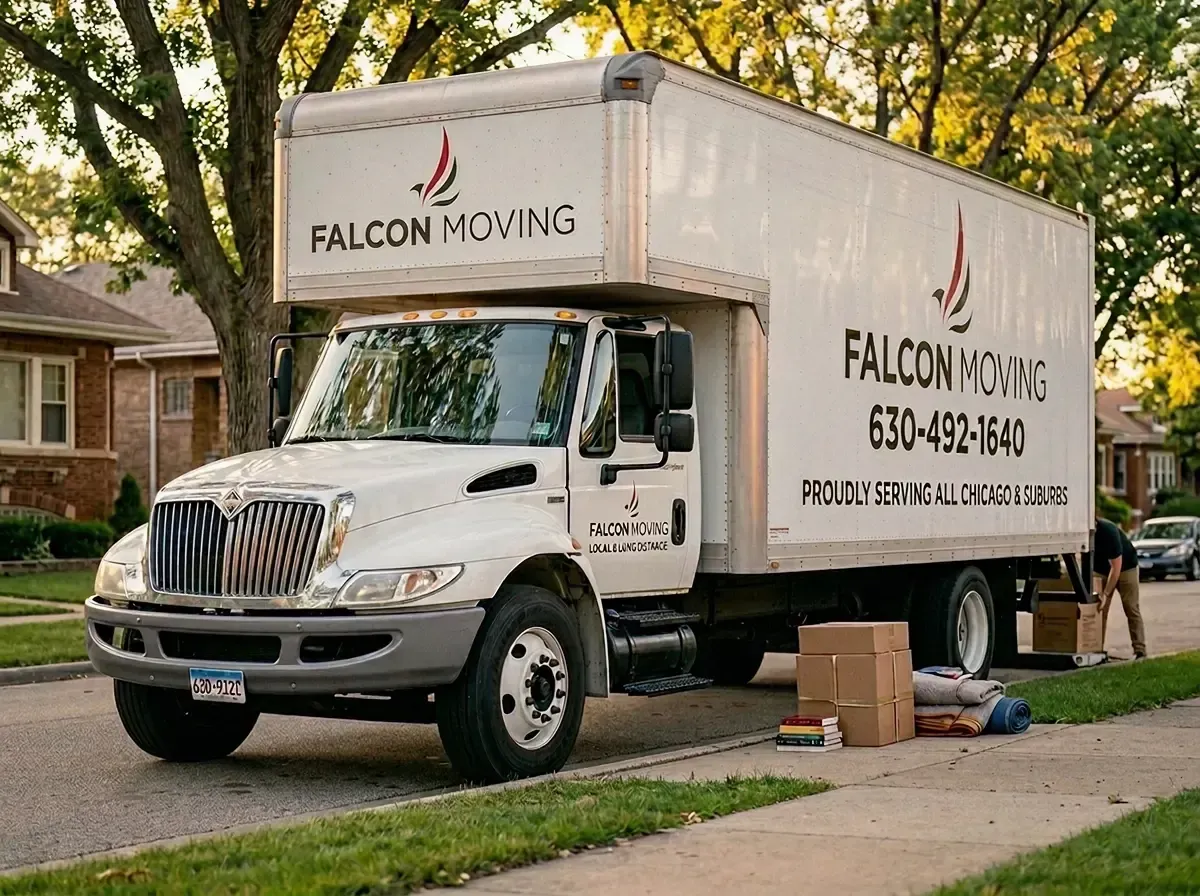
You already have the move-in cleaning checklist. You may even have a cleaning crew booked and a moving truck scheduled. What most Arlington Heights homebuyers do not have is the timing structure that keeps those two services from interfering with each other. A deep clean only works in an empty home. The moment boxes start entering the space, the cleaning window effectively ends.
If the schedule is not tightly controlled, one of three things happens: the cleaners are forced to work around furniture, the movers are delayed while cleaning finishes, or the home is never fully cleaned in the first place.
This guide includes a complete room-by-room move-in deep cleaning checklist and a practical scheduling framework called Window-Watch, used to protect the critical pre-occupancy cleaning window during local and long-distance moves in the Arlington Heights area.
Falcon Moving
supports coordinated scheduling for residential moves, including aligning delivery windows and cleaning crews to ensure the home is fully ready before items are placed inside.
Why Your Move-In Cleaning Checklist Will Fail Without the Right Schedule
A move-in cleaning checklist is a tool, not a strategy. The strategy is timing. The same checklist produces completely different results depending on when it is executed. Done in an empty home, it delivers a full reset. Done after boxes and furniture arrive, it becomes a partial clean with permanent blind spots.
Understanding how quickly access disappears is the starting point.
The 15 Percent Rule
The loss of cleanable space begins immediately.
- After the first box, roughly 15 percent of the floor space becomes inaccessible
- After furniture placement, that number can exceed 30 percent
The areas that matter most are the ones you lose first:
baseboards behind sofas, flooring under beds, corners behind wardrobes, and edges along walls where dust accumulates over time.
Once those areas are blocked, they are unlikely to be cleaned properly again without moving heavy furniture. In many homes, that does not happen for years. The implication is simple but often ignored: a true deep clean is only possible before anything
enters the home, not after.
The 4-Hour Window
Every move has a narrow gap between two events: the previous occupant leaving and the new occupant moving in.
In Arlington Heights, this window typically ranges from 2 to 6 hours, with 4 hours being the most common working estimate.
This is the only period when:
- Every floor surface is exposed
- All baseboards and corners are reachable
- Kitchens and bathrooms can be cleaned without obstruction
- No time is lost moving items to clean around them
Once the moving truck arrives, that window closes immediately. Most failed move-in cleans happen for one reason: The schedule collapses, and the truck arrives before the cleaning is complete.
Why Timing Fails in Practice
Homebuyers usually plan cleaning and moving as separate tasks. In reality, they are dependent on each other.
Without coordination:
- Cleaners rush or skip areas to finish before movers arrive
- Movers wait, increasing hourly costs
- Or cleaning is forced to continue around incoming items
In all three scenarios, the result is the same: a partial clean in a home that could have been fully reset.
Key Timing Benchmarks
- 15% of space lost after the first box
- 4 hours average pre-occupancy cleaning window
- 30 minutes minimum buffer recommended between cleaning completion and move-in
These numbers define the difference between a complete clean and a compromised one.
Move-In Deep Cleaning Checklist: Top Areas to Hit Before the First Box Arrives
A move-in deep clean is defined by access. Every surface you cannot reach once furniture is in place must be addressed now, while the home is still empty. The checklist below prioritizes the surfaces and includes technique notes for when incorrect cleaning methods cause long-term damage.
Core Checklist by Area
Before You Start: Sequence Matters
The order of operations determines whether this checklist actually works:
- Remove all leftover items or debris first
- Complete the full deep clean while the home is empty
- Maintain a buffer before the moving crew arrives
The correct sequence is always:
junk removal → deep cleaning → move-in
Kitchen: The Highest-Impact Room
The kitchen carries the highest cleaning load per square foot and the highest risk of residue transfer into daily use.
Focus on areas that are rarely cleaned between occupants:
- Inside cabinets and drawers
- Appliance interiors, especially refrigerator seals and dishwasher filters
- Hood filters and backsplash grout
For countertops, technique matters more than effort. Natural stone surfaces such as granite, marble, and quartzite require only pH-neutral cleaners. Acidic products, even mild ones, will gradually etch and dull the surface.
Bathrooms: Hidden Build-Up Zones
Bathrooms contain the most overlooked problem areas, particularly where water sits or circulates.
Priority areas include:
- The toilet tank interior, which often contains mineral buildup and biofilm
- Shower glass and tracks, where soap scum requires acidic treatment
- Grout lines, which may need sealing if older than two years
A standard surface wipe-down does not address these. They require targeted cleaning with the correct products.
Bedrooms and Living Areas: Dust and Airflow
These rooms appear clean, but they typically accumulate dust in overlooked areas.
Pay close attention to:
- Ceiling fan blades
- Window tracks and sills
- Baseboards, including areas where furniture will sit
- HVAC return vents
Removing vent covers and vacuuming just inside the duct improves air quality from day one and prevents dust recirculation after move-in.
Hardwood Floors: Technique Over Product
Hardwood floors are one of the easiest surfaces to damage during a move-in clean.
Use a two-step process:
- Dry dust mop to remove debris
- Lightly damp mop with a pH-neutral hardwood cleaner
Avoid:
- Steam mops, which force moisture into the wood
- Vinegar solutions, which degrade the finish over time
A properly cleaned floor protects the finish. An aggressive method shortens its lifespan.
Garage: The Last Clean Before Storage
The garage is often skipped, but once items are stored, it becomes difficult to address properly.
Clean:
- Oil and chemical stains
- Corners where pests may nest
- All shelving and surfaces
This step prevents contamination of stored items and avoids having to empty the space later.
A deep clean performed after move-in is not a deep clean. It is maintenance with obstacles.
The empty house is not a convenience. It is the only condition that allows every surface to be cleaned correctly, completely, and without compromise.
Move-In Cleaning in Arlington Heights, IL: What Local Homebuyers Need to Know
Arlington Heights is largely made up of single-family homes built between 1950 and 1985. That housing profile changes how a move-in clean should be approached. Older materials, repeated renovations, and long-term wear mean the goal is not just surface cleaning, but correcting years of buildup before the home is occupied.
Understanding these local factors before scheduling your cleaning crew and moving day prevents delays, missed areas, and unnecessary rework.
Older Home Cleaning Considerations
Homes from this era require more careful technique, not more aggressive cleaning.
- Hardwood floors often have thinner finish layers after multiple refinishes. Steam mops and vinegar solutions are more likely to cause permanent damage, not less.
- Bathroom grout in older tile is typically porous and has absorbed moisture and residue over time. Even if it looks clean, sealing is usually necessary to prevent ongoing absorption.
- Basements commonly show signs of moisture exposure between occupants, especially if dehumidifiers were not consistently used. Light mildew and musty odor are frequent and should be addressed before storage or occupancy.
These are not edge cases in Arlington Heights. They are standard conditions in homes of this age range.
Cook County Closing Timelines
Timing is where most move-in cleaning plans fail.
Closings in Cook County typically happen between morning and early afternoon. That creates a narrow window, often starting around midday, where the home is empty and accessible for cleaning.
Two common mistakes:
- Waiting until closing day to book a cleaning crew
- Assuming same-day availability in the afternoon
In practice, most cleaning services are fully booked by then. The correct sequence is to schedule cleaning as soon as the closing date is confirmed, not the day before.
HOA and Building Access Requirements
For townhomes and condominiums, access rules can directly impact your cleaning window.
Some Arlington Heights communities require:
- Reserved loading zones
- Freight elevator bookings
- Restricted move-in hours
If these are not accounted for in advance, the moving truck may be forced to arrive earlier or later than planned, compressing or eliminating the cleaning window.
Working with a moving company familiar with local community requirements reduces this risk. Falcon Moving’s crews operate regularly in Arlington Heights and coordinate around these constraints to help preserve the pre-move cleaning window.
Move-in cleaning in Arlington Heights is not just about what to clean. It is about when and how to clean based on the realities of older homes, local closing timelines, and access restrictions. Getting those three factors right is what allows the cleaning checklist actually to work.
A Practical Move-In Cleaning Checklist for a Spotless Start
This is the condensed, closing-day version of the full checklist. It is designed for real-time use, either as a printout or a quick briefing for your cleaning crew before the moving truck arrives. The focus is on priority surfaces and correct sequencing, not unnecessary detail.
Before you start, remember the constraint: this checklist only works if the home is still empty. Once items begin to enter, access is lost, and the scope becomes partial.
Closing-Day Checklist
- Before the cleaning window opens: Confirm that all previous owner items have been removed. Verify the cleaning crew’s arrival time. Maintain a 30-minute buffer between the completion of cleaning and the moving crew's arrival.
- Kitchen: Clean cabinet and drawer interiors; oven and hood filters; refrigerator interior and door gasket; dishwasher filter and spray arms; sink drain and disposal; tile grout; and the undersink cabinet. Use a pH-neutral cleaner for stone countertops.
- Bathrooms: Clean the toilet tank interior, shower grout and door tracks, the exhaust fan cover, the medicine cabinet interior, and the area behind and under the toilet. Use an acidic cleaner (vinegar or a dedicated product) for shower glass. Seal grout if it is more than two years old.
- Bedrooms: Clean the interiors of closets and floors, window tracks and sills, ceiling fan blades, and all baseboards, including areas covered by furniture.
- Living Areas: Clean the interior of the fireplace, light switches, outlet covers, ceiling fans, and HVAC return vents. Remove vent covers and vacuum just inside the duct.
- Hardwood Floors: Start with a dry dust mop, then follow with a light, damp mop using a pH-neutral hardwood cleaner . Avoid steam mops and vinegar; both degrade the finish over time.
- Garage: Address oil stains, chemical residue, and any signs of pest activity before placing storage items.
- Post-cleaning confirmation: Confirm the property is fully cleaned and still empty before allowing the moving crew to begin unloading.
A checklist like this does not, on its own, create a clean home. It works only when the timing is protected, and every step is completed before the first box crosses the threshold.
Synchronize Your Move-In for a Truly Clean Start
A move-in cleaning checklist is the right starting point. The strategy that makes it work is timing. The same checklist produces very different results depending on when it is executed. In an empty home, it delivers a full reset. In a home filled with boxes, surface cleaning becomes a permanent blind spot.
Protecting the window between move-out and move-in is the highest-leverage decision you can make. That window is when the surfaces that matter most are fully accessible, and only for a few hours.
The difference comes down to details that are easy to miss but difficult to correct later:
- Toilet tank interiors that are rarely cleaned between occupants
- HVAC vent interiors that circulate dust through the home
- Baseboards and floor edges that will sit behind furniture for years
- Grout lines that have absorbed moisture and residue over time
These areas are reachable once, on closing day, before the first item enters the home. After that, access is limited or lost entirely.
Falcon Moving supports Arlington Heights homeowners with coordinated scheduling that keeps this window intact. Services include local and
long-distance moving
,
packing, storage
, and
junk removal
, all aligned through Window-Watch timing to prevent overlap between cleaning and move-in.
To plan your move around the cleaning window from the start,
contact Falcon Moving today
!